Most offices focus on reducing paper or cutting energy consumption when discussing sustainability. Printer cartridges get far less attention, even though they contribute a surprising amount of waste. In the United States alone, approximately 375 million of these cartridges are discarded each year, yet roughly 70% of ink cartridges end up in landfills rather than being recycled. These cartridges can take anywhere from 450 to 1,000 years to decompose, sitting in landfills and releasing harmful materials into the environment during that time.
Despite the rise of digital tools, businesses still depend on printers for day-to-day work, which results in a consistent supply of used cartridges that need proper disposal. Recycling them is a simple way for offices to reduce waste, use resources more responsibly, and improve how they manage supplies. It’s an easy practice that brings steady, long-term benefits.
The Environmental Cost of Discarded Cartridges
Printer cartridges are made from plastics and metals that don’t break down naturally. When they end up in the trash, they occupy valuable landfill space for centuries. Toner and ink residue can also leach into soil and water if cartridges aren’t disposed of properly, introducing volatile organic compounds and heavy metals into the ecosystem.
The production process adds to the problem. Manufacturing a single toner cartridge requires approximately three quarts of oil and generates about 10.6 lbs. (4.8 kg) of CO2 emissions. When offices throw cartridges away, all the environmental cost of extracting and processing those materials is lost. Yet remarkably, up to 97% of the materials in printer cartridges can be recycled, meaning the vast majority of this waste is preventable.

Why Printing Isn’t Going Away
Even though digital tools are common, printing remains a regular part of many workplaces. Healthcare, education, legal, finance, and government offices still rely on physical documents for records, signatures, or compliance. Hybrid work has also changed printing behavior: many employees now print both at home and in the office, which increases overall cartridge usage. All of this contributes to a steady rise in cartridge waste that recycling can directly address.
How Cartridge Recycling Works
The recycling process starts with collection. Offices save their empty toner or ink cartridges and return them through a recycling partner. Once collected, cartridges are sorted. Some can be remanufactured (cleaned, refilled, and tested for quality) while others are broken down so their materials can be reused in new products.
Plastics, metals, and residual toner are separated and processed to keep them out of landfills. These recovered materials can be turned into new cartridge components or used in other manufacturing applications. Recycling keeps valuable resources in circulation and reduces the need to produce new materials from scratch, which lowers the overall environmental impact of printing.
The Business Benefits Beyond Sustainability
Cartridge recycling is not only an environmentally responsible choice. It also supports everyday office routines in practical ways.
Removing cartridges from regular trash reduces the amount of waste an office has to handle. Many recycling partners take care of pickup or shipping at no cost, which keeps the process simple and avoids added expenses. Recycling also helps businesses document their sustainability efforts, which can be useful for internal reporting or meeting company goals.
Recycling programs also improve the way offices manage print supplies. Empty cartridges often end up scattered around printers or stored in drawers because no one knows what to do with them. A designated collection box keeps everything in one place and makes it easier to send cartridges out in batches. This creates a cleaner storage area and gives offices a clearer view of how often cartridges are being used. That information helps teams plan supply orders more accurately and avoid both shortages and overstocking.

Addressing Common Concerns
Many offices hesitate to start recycling because they think it will take extra time or create more work. Modern recycling programs make the process simple. Most partners offer prepaid labels, local drop-off locations, or scheduled pickups, so offices do not need to arrange shipping or handle complicated steps.
Space is another concern for some teams. In reality, a collection box does not require much room. It can sit on a shelf, under a printer stand, or in a supply closet. Employees only need to place empty cartridges in the box. Once it is full, the recycling provider takes care of the rest. This makes it easy for any office to participate without changing daily routines.
Recycling as Part of a Managed Print Services Program
Many Managed Print Services plans include cartridge recycling. This creates a simple workflow because empty cartridges are collected when new ones are delivered. The provider tracks supply usage and manages the recycling process, so the office does not need to monitor each step.
This setup also gives businesses a clearer view of how often cartridges are replaced. With that information, they can plan supply orders more accurately and avoid running out or overordering. It is a practical extension of a service that already supports consistent printing and organized supply management.
Getting Started: Practical Steps for Any Office
Any office can begin recycling by placing a collection box near printers. Clear instructions help, but convenience is usually enough to encourage employee participation. Mentioning the program during team meetings or onboarding also boosts awareness and helps establish it as a standard practice.
For offices that want a more structured approach, several options exist. Some businesses partner with national recycling programs offered by major manufacturers. Others work with local suppliers who provide pickup services and ensure responsible recycling. The right choice depends on factors like office size, printing volume, and whether the business prefers to combine recycling with regular supply deliveries.
A Local Approach to Cartridge Recycling
Choosing a recycling program that fits naturally into the way the office already works each day makes participation easier. Many national programs are available, but they often require offices to package and ship cartridges on their own. Some online suppliers do not offer recycling at all, which leaves businesses without a clear next step for handling their empties.
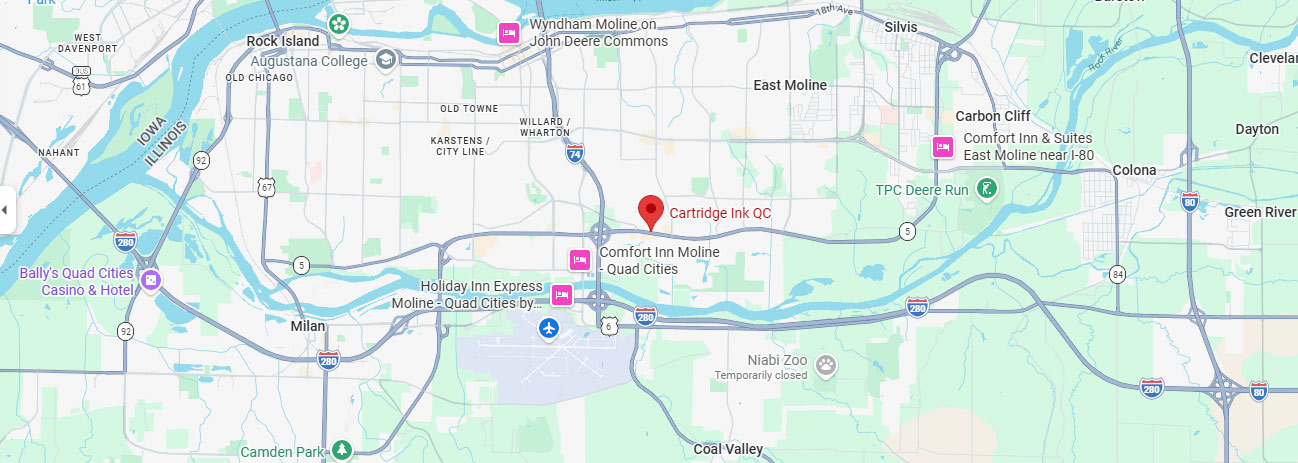
Cartridge Ink QC offers a local solution that removes those barriers. Offices can bring their used cartridges during routine supply pickups or drop them off when convenient. This works for small teams that generate only a few cartridges each month as well as high-volume environments. Cartridges can be collected in any box. When the box is full, the office can request a pickup or choose to drop it off.
All cartridges collected through Cartridge Ink QC are recycled using safe, environmentally responsible methods. This keeps plastics, metals, and toner residue out of landfills and supports the reuse of valuable materials. The process blends into normal office routines and does not add tasks for employees, which makes participation consistent over time.
For businesses that want a simple and reliable way to recycle, having a local partner removes the most common challenges. It eliminates the need to ship cartridges, provides flexible options for pickup, and ensures that materials are handled correctly. It also lets the business support a local supplier while improving its environmental impact.

Making an Impact Through Simple Changes
Cartridge recycling gives offices a practical way to reduce waste and use resources more responsibly. Millions of cartridges are discarded every year in the U.S., and many still end up in landfills. Since most workplaces rely on printers for everyday tasks, cartridge waste will continue unless businesses choose a better way to handle it.
Recycling prevents usable materials from being thrown away and reduces the need to manufacture new cartridges from raw resources. It also cuts down on the oil and energy required to produce new plastics. The process is easy to adopt and fits naturally into the way most offices already manage their print supplies.
Offices can recycle through a national program, through a Managed Print Services partnership, or with a local partner like Cartridge Ink QC. The goal is to choose an option that works smoothly with existing routines. Small, consistent steps like these help create a workplace that uses materials wisely and reduces long-term waste.
About Cartridge Ink QC
Cartridge Ink QC delivers reliable supplies, service, andbrand-agnostic printing solutions that help Quad Citiesbusinesses cut waste and control costs. With 20+ years of experience, we focus on honest guidance,so you get the right setup and more value from every page.